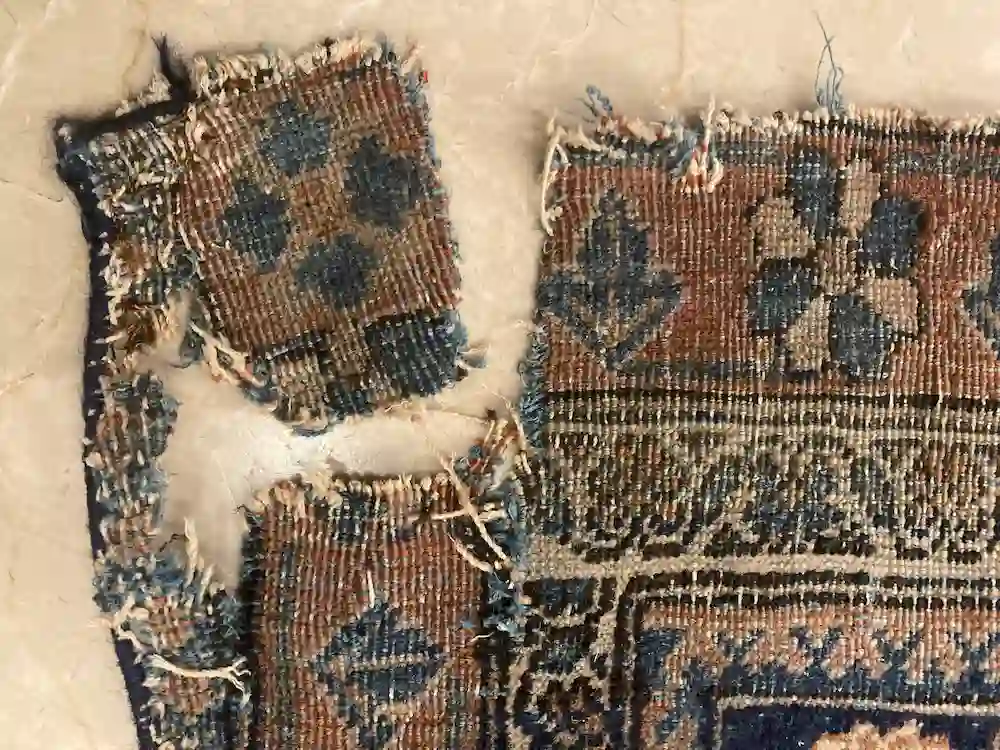
Persian rug care and maintenance: how to preserve your rug over time
A Persian rug does not ask for too much, but it does ask for attention. You do not need to live in fear every time someone walks into the room with shoes on, and a rug should not be treated as if it were locked inside a museum. But it should be understood a little.
In our shop, we often say that a rug lives with the home. It sees footsteps, dust, light, animals, children, moved chairs, dinners, celebrations, house moves and the occasional small accident. The point is not to keep it still forever, but to accompany it over time with the right care.
Good maintenance does not mean washing the rug constantly or using random products. It means observing it, vacuuming it carefully, acting quickly on stains, avoiding aggressive remedies and understanding when it is better to stop and ask for advice.
Every rug is different. A wool rug, a kilim, an antique rug, a fine rug with silk parts or an everyday rug do not all need the same care. First you look at the piece, then you decide how to treat it.
Before the vacuum cleaner, there is the eye. Looking at a rug from time to time helps you understand whether the pile looks dull, whether the fringes are opening, whether the edges are worn, whether there are stains, deep dust, odours or stiffer areas.
The front shows the design, the colours and the wear of the pile. The back tells about structure, knotting, old restorations, humidity, dust and possible hidden problems.
A rug should not be checked only when "something happens". Sometimes lifting a corner, looking under a piece of furniture or rotating it after a few months is enough to prevent a small issue from becoming a more serious job.
Vacuuming the rug: useful, but with care
Vacuuming is one of the simplest and most important forms of care. It removes dust, crumbs, hair, residues and light dirt that, over time, can move down to the base of the pile.
It should be done regularly, but not aggressively. A rug should not be "fought" with a vacuum cleaner. It should be cleaned with attention, especially if it is antique, fine, has delicate fringes or includes silk parts.
How to vacuum a Persian rug
It is better to use moderate suction and, when possible, avoid very strong rotating brushes. Vacuum following the direction of the pile, without insisting too much on the same point.
Fringes should not be pulled into the vacuum with force. They are a delicate part of the rug and, if already weak, can get worse. It is better to vacuum from the centre towards the outside, stopping before pulling the fringes.
How often to vacuum
In a normal home, once or twice a week may be enough. More frequent vacuuming can be useful if there are pets, children or a lot of foot traffic. In the most lived-in areas, dust enters more deeply and the rug can become heavier sooner.
There is no single frequency for every rug. A quiet room, a rug under a table, a rug in an entrance area or an antique rug in a living room all have different needs.
Rotate the rug and check hidden areas
Rotating the rug from time to time helps distribute light, foot traffic and wear. It is a small habit, but it can make a real difference over the years.
Areas under furniture, sofas and tables should be checked. They are often the quietest places for dust, moths and small problems that are not immediately visible. The rug may seem still, but something can happen underneath.
Light also matters. A rug always exposed to the same sunlight may fade unevenly. Rotating it helps avoid differences that become too marked.
Stains: the first rule is not to make them worse
When something falls on a rug, the first instinct is often to rub. It is the most natural gesture, but very often also the most dangerous.
The first rule is to blot, not rub. Use a clean white cloth or white absorbent paper, place it on the stain and absorb calmly. Rubbing can push the dirt into the pile, widen the mark and disturb the colours.
The second rule is not to improvise with products found at home. Vinegar, baking soda, soap, degreasers, alcohol or products for carpets can behave differently on wool, silk, cotton, natural dyes or old restorations.
You should act immediately when the stain is fresh: wine, coffee, urine, vomit, oil, mud or food. First remove the excess, then blot. If the rug is antique, fine, has silk parts, or if colour transfers onto the cloth, it is better to stop early.
A first domestic intervention is meant to limit the damage, not always to solve it completely.
What to avoid on stains
It is better to avoid hot water, steam cleaners, bleach, ammonia, aggressive degreasers, strong perfumes and repeated attempts with different products.
Sometimes the real problem is not the stain itself, but what is done afterwards in the attempt to remove it.
Wool, silk, kilims and everyday rugs: not all rugs react in the same way
A wool rug can be strong, but it is not indestructible. Wool handles daily life well, but it does not like aggressive products, prolonged humidity, heat or poor drying.
Silk requires much more caution. It can change appearance, brightness or texture if treated incorrectly. On fine rugs or rugs with silk parts, it is better not to improvise.
Kilims and flatwoven rugs have a different structure from knotted rugs. Because they do not have a high pile, they may seem easier to clean, but liquid can spread through the weave in a different way.
Synthetic rugs are often easier to manage, but they should not be confused with handmade Persian rugs. The same rules cannot always be transferred from one type of rug to another.
Rug washing: when it is really needed
Washing should not be an automatic answer, but it should not be postponed for years either. A rug may look clean on the surface while holding deep dust at the base of the pile.
Over time, dust weighs the rug down, dulls the colours and can make the wool feel stiffer. In some cases, it may also encourage bad odours, moths in Persian rugs or preservation problems.
A proper washing decision should start from observing the rug: materials, colours, pile, back, fringes, edges, possible old restorations and general condition.
Water washing
Water washing can be suitable for many Persian and Oriental rugs when it is done with care and with correct drying. It should not be confused with an improvised domestic wash.
Water, if used badly, can create marks, odours, deformation or problems with colours. This is why it is important to understand the rug before doing anything.
Dry cleaning and powders
Some light cleaning methods can help with maintenance, but they do not always solve deep dirt, odours or stains that have entered the pile. Even products described as "delicate" should be used with caution, especially on fine or antique rugs.
Steam
Steam may seem modern and practical, but on Persian rugs, antique rugs, fine rugs or rugs with silk it is better to be very cautious. Heat and humidity together can create problems for fibres, colours and old restorations.
Drying: a step not to underestimate
A washed or wet rug must dry properly. Trapped humidity can leave odours, stiffen some areas or create problems in the structure.
It is better to avoid strong direct sunlight, radiators, hot hairdryers or aggressive heat sources. Drying must be complete, regular and suitable for the type of rug.
A rug that is still damp should not be placed back immediately, especially on delicate floors or in poorly ventilated areas.
Storing a rolled rug
If a rug has to stay unused for months, it is better to roll it, not fold it. Folds can leave marks and stress the structure.
The rug should be stored in a dry, clean and well-aired place. Sealed plastic should be avoided for long periods, because the fibre needs to breathe.
Before storing it, it is wise to vacuum it and check that there are no stains, humidity, moths or odours. A rug closed away with a problem inside may give back an unpleasant surprise after a few months.
Moths, odours and humidity
Moths do not arrive with a sign saying "attention, we are eating the rug". They work silently, often under furniture, in areas that are rarely moved, or in rugs stored badly.
This is why it is useful to check the back, corners, fringes and hidden areas from time to time. Fine dust, missing wool, small holes or insects near the rug are signs that should not be ignored.
Humidity is another silent enemy. It can leave odours, stiffness, mould or changes in the fibre. A rug should not remain damp for long.
When to call a professional
It is worth asking for advice when the rug is antique, fine, silk, very large, very dirty, stained, affected by persistent odours, weak fringes, worn edges, moths or doubts about the material.
There is no need to wait until the damage becomes serious. Sometimes a first check helps to understand whether simple maintenance is enough, whether rug cleaning in Verona is needed or whether rug restoration in Verona should also be considered.
In our shop, in the historic centre of Verona near the Duomo, we can look at the rug calmly. First we understand the piece, then we decide which path makes sense.
A small routine to help the rug live better
A good habit can be:
vacuum regularly, without stressing fringes and edges;
rotate the rug from time to time;
check the back and the areas under furniture;
act quickly on stains by blotting;
avoid aggressive products;
do not leave the rug damp;
ask for advice if odours, moths, marks or weak areas appear.
There is no need to become obsessed. It is enough not to forget that a handmade rug is a living piece, one that accompanies the home and changes over time.
If you want to understand better what kind of rug you have at home or how it behaves over time, it may help to look at the page about Persian and Oriental rugs in Verona.
Frequently asked questions
How often should I vacuum a Persian rug?
It depends on how the room is used. In a normal home, once or twice a week may be enough. If there are pets, children or heavy foot traffic, it may be useful to do it more often, always with care.
Can I use a steam cleaner on a Persian rug?
It is better to avoid it, especially on antique, fine, silk rugs or rugs with old restorations. Steam combines heat and humidity and can create problems for fibres, colours and structure.
Can I wash a Persian rug at home?
It depends on the rug. With Persian, Oriental, antique or fine rugs, it is better not to improvise. A badly done wash can leave marks, odours, deformation or colour damage.
What should I do if something falls on the rug?
Remove the excess and blot immediately with a clean white cloth, without rubbing. Do not use aggressive products or many remedies together. If the rug is delicate or colour transfers, stop.
How should a rolled rug be stored?
It should be rolled, not folded, and kept in a dry, clean and ventilated place. Sealed plastic should be avoided for long periods. Before storing it, check that it is clean and dry.
When is professional rug cleaning needed?
When the rug is very dirty, dull, heavy with dust, affected by persistent odours, difficult stains, moths, or when it is an antique, fine or silk piece. It should still be observed first.