A handmade rug should not be washed like an ordinary surface. Before washing comes observation: the rug needs to be opened, observed and read from the front and the back. You need to understand the wool, the pile, the colours, the fringes, the edges and the way the piece has lived over time.
Every rug arrives with its own story: one has been lived with every day, another has been rolled up for years, another inherited, another bought more recently, another already showing early signs of wear. Before washing it, you need to understand what it has been through.
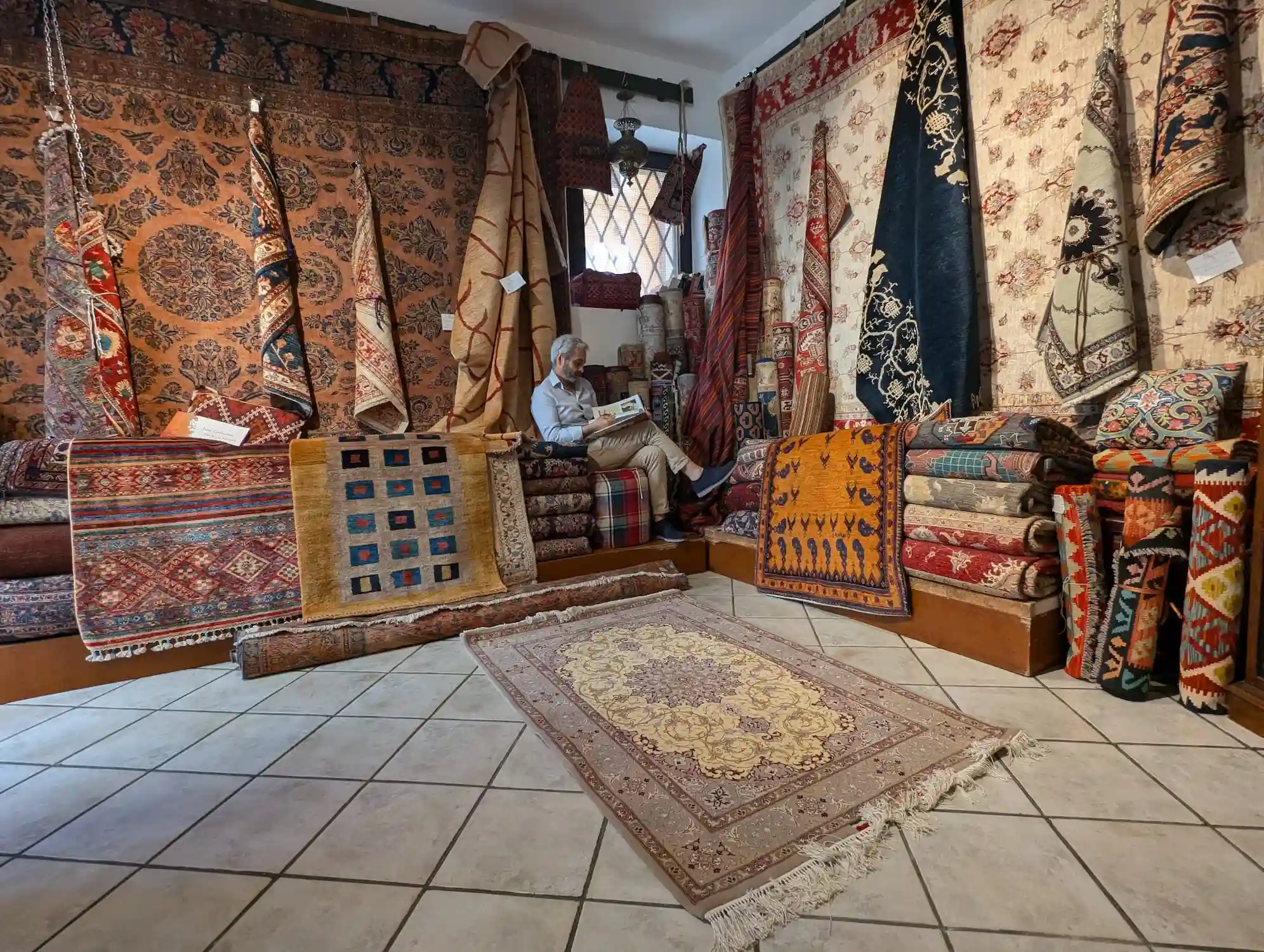
At Shahmansouri in Verona, the cleaning of Persian and Oriental rugs in Verona begins from this attention. An antique rug, a kilim, a fine rug, a piece for daily use or a rug with silk details do not all call for the same treatment. Each rug carries its own materials, structure and condition.
Good cleaning does not simply make a rug look cleaner. It helps remove the dust that has settled over time, lightens the pile, respects the fibres and helps the piece last better over time.
When a rug arrives at the shop, the first step is not to decide straight away how it should be washed. It is looked at calmly first. Some rugs are sturdy and have accompanied the life of a house for years; others are finer, more delicate or more marked by time.
You look to see whether the colours are stable, whether the pile is worn, whether the fringes still hold well, whether the edges have weakened, or whether certain areas have become stiff from humidity, old stains or unsuitable past treatment.
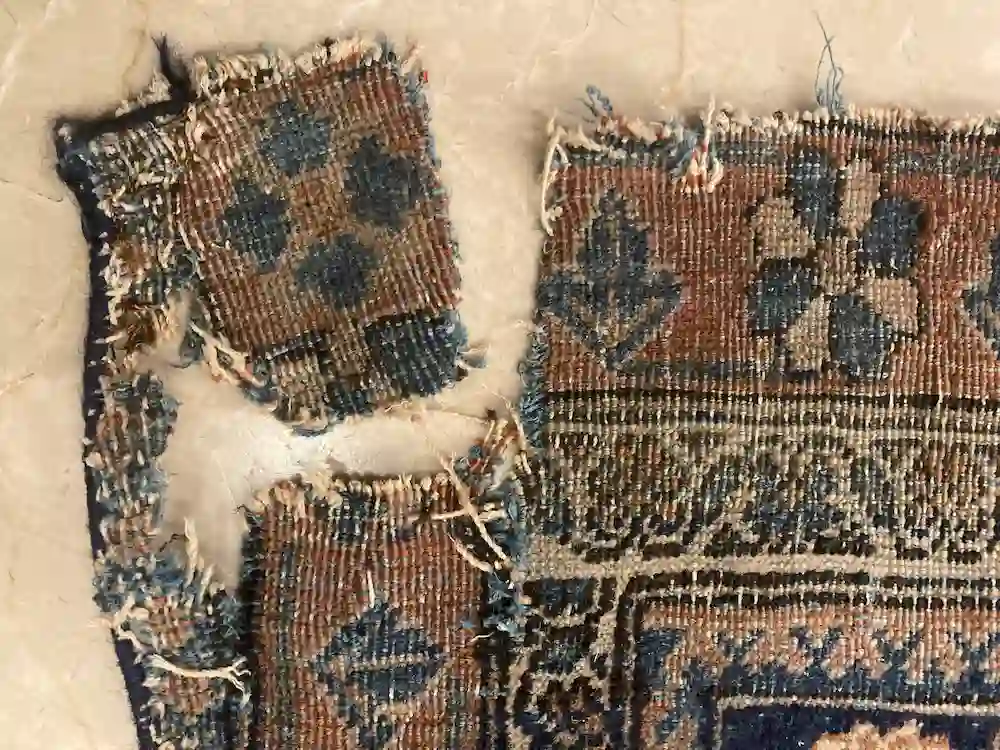
The back often tells as much as the front: it shows the structure, the regularity of the knotting, any stiffened areas, old restoration or points where the rug has suffered more than it seems to on the surface.
Even touch can reveal a great deal. A rug may appear simply dirty, but the wool can reveal dryness, stiffness, deep dust or a fibre that needs greater care.
Front
You observe whether the colours are stable and whether the pile is worn.
Back
The back reveals the structure, the regularity of the knotting and any stiffened areas.
Touch
The wool can reveal dryness, stiffness, deep dust or a fibre that needs greater care.
Fringes and edges
Fringes, edges and stiffened areas help show whether the piece has already suffered more deeply.
This initial reading helps avoid rushed treatment. A rug is not only its surface: beneath the design there are knots, weft, warp, dyes and materials that may react differently. That is why seeing the rug in person remains important, especially with antique, fine or particularly delicate pieces.
Dust beating, washing with water and care of the pile
Dust beating is not a secondary stage. In many rugs it is precisely there that you understand how much dust has settled over the years, even when the surface still appears orderly.
Dust does not remain only on top of the rug: over time it sinks down to the base of the knots, settles into the structure and can make the piece heavier, duller and harder to maintain.
Dust beating
Careful beating out of the dust removes part of what has settled deep inside before the actual washing begins.
Washing with water
After that, when the rug allows it, washing with water can follow, taking into account fibre, colour stability and the overall condition of the piece.
Care of the pile
A clean rug should not lose its natural hand: it should remain soft, legible in colour and true to its own material.
Water, when used in the right way, can bring freshness back to a rug. Used without attention, it can put colours, fibres or already weakened areas at risk. That is why washing should always be decided only after the piece has been observed.
The pile too needs to be treated with respect. A clean rug should not lose its natural hand: it should remain soft, clear in its colours and coherent with its material. That is why washing cannot be a single routine for everything, but must be considered in relation to the rug in front of you.
Everyday rugs, antiques, fine weavings, silk and kilims
A rug used every day often carries the marks of the house: dust, foot traffic, more heavily worn areas, small stains, worn fringes. In such cases cleaning can help restore order and lightness to the piece, always after checking its condition.
Everyday rugs
Dust, foot traffic, more worn areas and small stains often call for a return to order and lightness.
Antique rugs
Time may have weakened edges, fringes or structural parts, and asks for a more cautious eye.
Fine rugs and silk details
The brightness of the material, the compactness of the knot and the delicacy of the finishing may call for greater caution.
Kilims
Because they are flatwoven, they do not have the same pile or the same knot structure and need a different reading.
An antique rug asks for a more prudent eye. Time may have weakened the edges, the fringes or parts of the structure. Fine rugs and rugs with silk details need to be examined with even greater attention, because the way the material catches the light, the compactness of the knot and the delicacy of the finishing may all require extra care.
Kilims behave differently from knotted rugs as well. Because they are flatwoven, they do not have the same pile or the same knot structure. Before washing them, it is important to understand the type of weaving, the colours and the overall condition of the piece.
Dust, moths, humidity and stains
Many rug problems begin quietly. Dust gathers without drawing attention to itself. Humidity can stiffen certain areas or leave persistent smells. Moths may begin from tiny points and, if overlooked, go on to damage the pile or the structure. Stains, especially when treated at home with unsuitable products, may leave marks or alter the colours.
Dust
Dust gathers quietly and can make the rug heavier and duller over time.
Moths
Moths can begin from small points and go on to damage the pile or the structure.
Humidity
Humidity can stiffen certain areas or leave persistent smells, especially in rugs stored for a long time.
Stains
Stains treated at home with unsuitable products can leave marks or alter the colours.
A rug that has remained rolled up for a long time is not always safe. If it has been kept in a damp or poorly aired place, it may develop odours, stiffness or small fragilities that are not immediately obvious.
A stain should not be judged only by the colour it leaves. What matters too is how deeply it has penetrated, how long it has been there and whether someone has already tried to treat it with unsuitable products.
The rug does not always show the damage immediately. Sometimes you notice only that it has lost brightness, that one area feels harder, that a fringe has weakened or that an edge is beginning to open.
In such cases it is better to ask for an opinion before trying to act on your own. Water used without control, harsh detergents or improvised attempts at cleaning can make the situation worse, especially with Persian, Oriental and handmade rugs.
When to ask for a check or send a photograph
For an initial opinion, it can be useful to send a few photographs of the rug. It helps to show the whole rug, a detail of the pile, the back, the fringes, the edges and any stains or damaged areas.
Useful photographs to send
whole rug
back
pile detail
fringes and edges
stains or damaged areas
Photographs help show whether the rug seems to call for a simple check, a washing or a more careful evaluation. Naturally, in some cases seeing it in person remains the safest step: colour, smell, stiffness, pile wear and colour stability are not always fully understood from an image.
If you are in Verona, you can contact the shop for an initial opinion and, when appropriate, bring the rug to the showroom to look at it together more closely.
Send a photograph of the rug or contact the shop for initial guidance.
Washing and restoration: when they are two different things
Washing concerns dust, dirt, stains, odours and care of the pile. If an inspection reveals weakened fringes, open edges, holes or worn structural areas, the issue is no longer only one of cleaning.
In that case, you can consult the page dedicated to Rug Restoration in Verona or ask the shop for an initial inspection.
Initial guidance
Do you have a rug to wash or have checked?
You can send a few photographs or contact the shop for initial guidance. Seeing the rug in person remains important when it is antique, fine or delicate.
There is no single rule for everyone. It depends on use, where the rug is placed in the house, dust, humidity and the condition of the piece. A heavily lived-with rug may have different needs from a more delicate piece or one that is less walked on.
Is washing with water suitable for every rug?
Not always. Washing with water can suit many rugs, but first you need to observe the materials, colours, structure and general condition. With handmade rugs, that evaluation matters.
Can I send a photograph of the rug?
Yes. For an initial opinion you can send photographs of the whole rug, the back, the pile, the fringes, the edges and any stains or damaged areas.
Are washing and restoration the same thing?
No. Washing concerns cleaning and care of the rug. Restoration concerns worn, damaged or weakened parts such as fringes, edges, holes or damaged areas.