Persia: history, art and iconic places
The name Persia evokes far more than a political geography. It suggests historic cities, trade routes, gardens, calligraphy, monumental architecture, decorative arts and a domestic tradition in which rugs, textiles and crafted objects have always carried aesthetic as well as practical value. For this reason, understanding Persia helps visitors read Persian rugs and handicrafts with greater depth.
This page offers a concise cultural route through people, cities and emblematic places. It is not intended as a full travel guide, but as a useful framework for connecting handmade Persian objects to the wider human and historical landscape from which they come.
A mosaic of peoples, languages and traditions
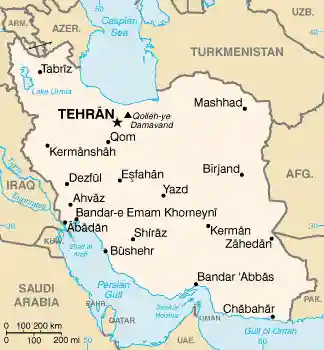
Contemporary Iran includes a wide range of communities and regional identities: Persians, Azeris, Kurds, Lors, Balochs, Turkmens and many others. Alongside the major cities there are still rural and tribal areas where distinct rhythms, techniques and visual languages have been preserved. This diversity is one reason Persian rugs do not form a single style, but rather many schools and regional variations.
Farsi is the official language, yet the cultural landscape is broader. Historic Persia has long been in dialogue with the Caucasus, Central Asia, Anatolia and the Indian world. In material culture this exchange appears as differences in motifs, colours and techniques, visible in rugs, ceramics, textiles and chased metalwork alike.
Tehran: living museum between modernity and memory
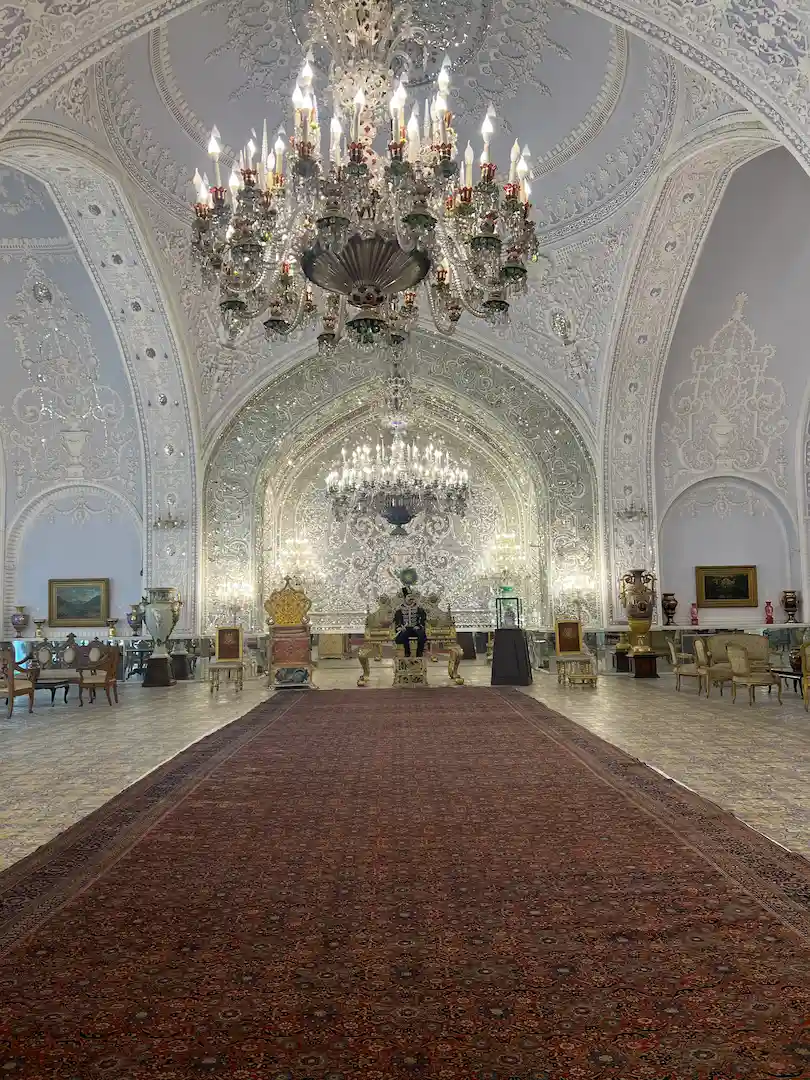
Tehran is a vast metropolis where traffic, universities, museums, residential quarters and historic palaces coexist in often surprising ways. Visitors encounter an energetic, layered city that resists any simple stereotype. Golestan Palace, with its halls, mirrors and court decoration, is one of the places that best conveys the passage between dynasties, visual taste and the representation of power.
The capital also hosts institutions essential for understanding the setting of Persian rugs and decorative arts: the National Museum, the Carpet Museum and museums devoted to glass, ceramics and applied arts all help connect archaeology, craftsmanship and material culture.
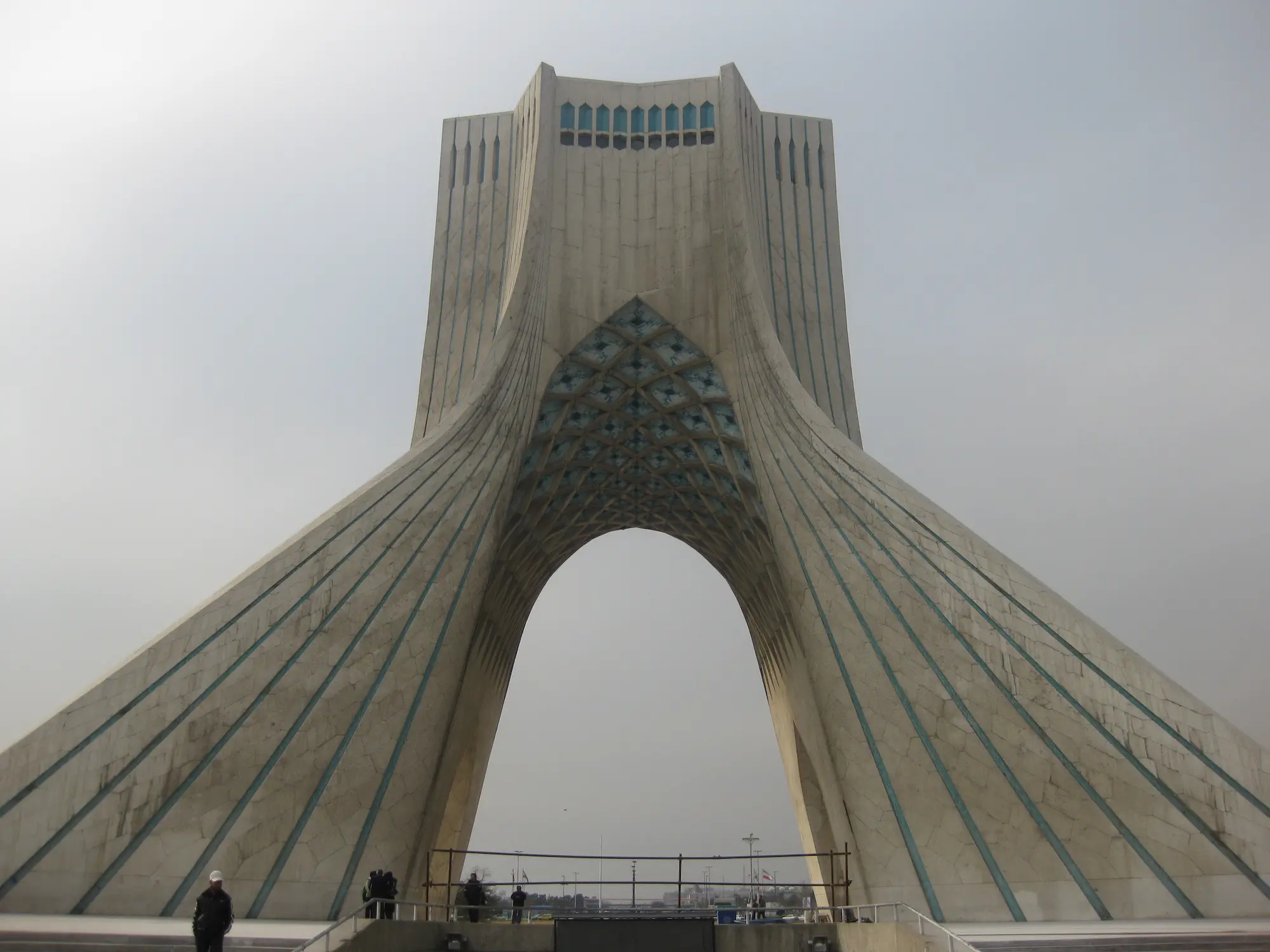
Among Tehran's modern symbols, Azadi Tower stands out. Built in 1971, its form combines monumental lines with references to older Persian architecture, becoming a visual threshold between past and present. This coexistence of memory and contemporary life is an important part of Persia today.
Isfahan: the classical measure of Persian beauty
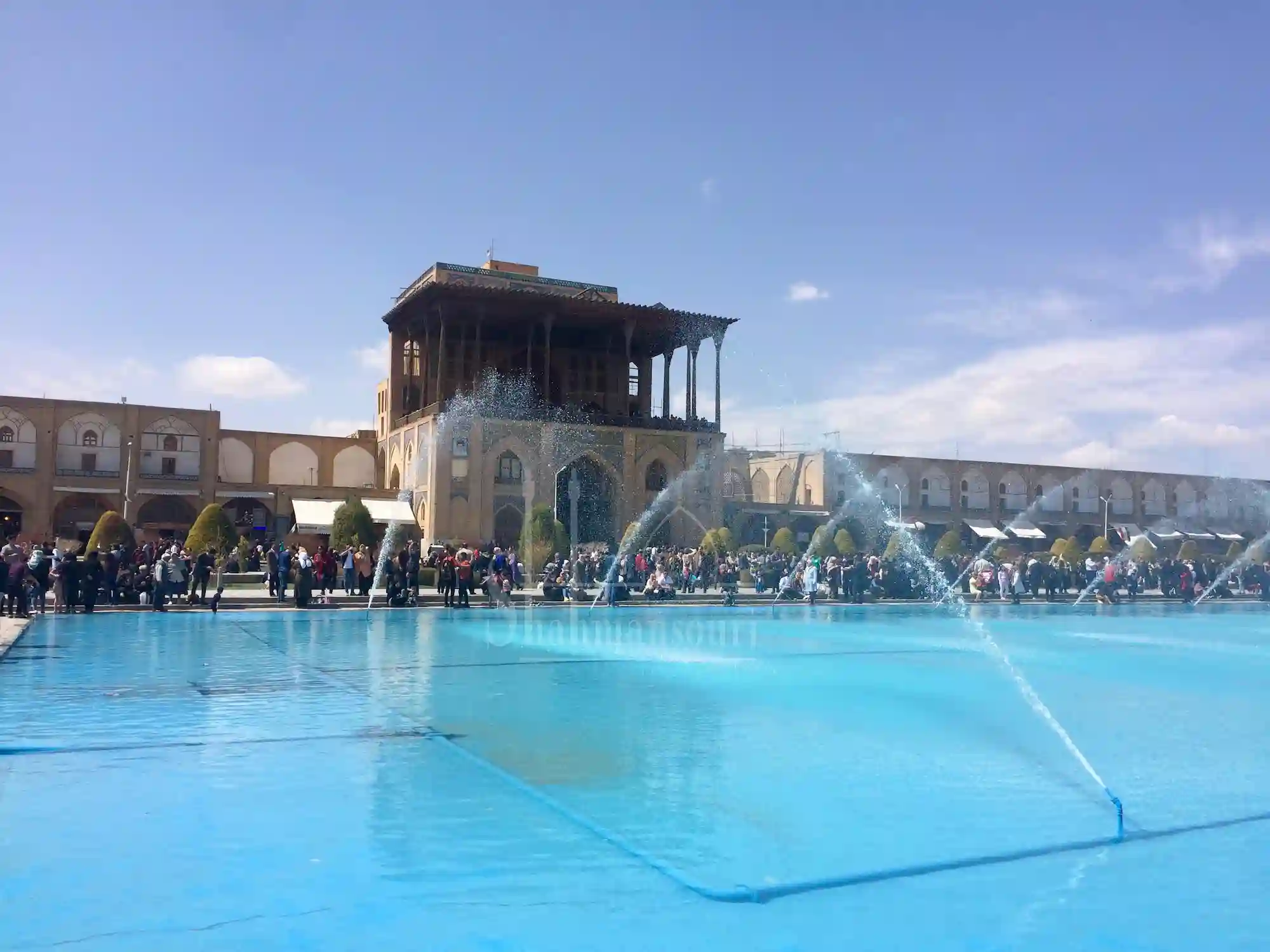
Isfahan is often considered the city that best summarises classical Persian civilisation. Under the Safavids it became a major artistic and political centre, and it still offers one of the densest concentrations of monumental architecture in Iran. Ali Qapu Palace, Naqsh-e Jahan Square, the bridges, mosques and bazaars compose an urban landscape where art, commerce and daily life are closely intertwined.
Many craft traditions now associated with refined Persia also pass through Isfahan: khatam inlay, hand-printed textiles, miniatures, engraved metalwork, blown glass and ceramics. This is one reason why Isfahan is so strongly linked to the idea of Persian elegance, including in the world of urban rugs.
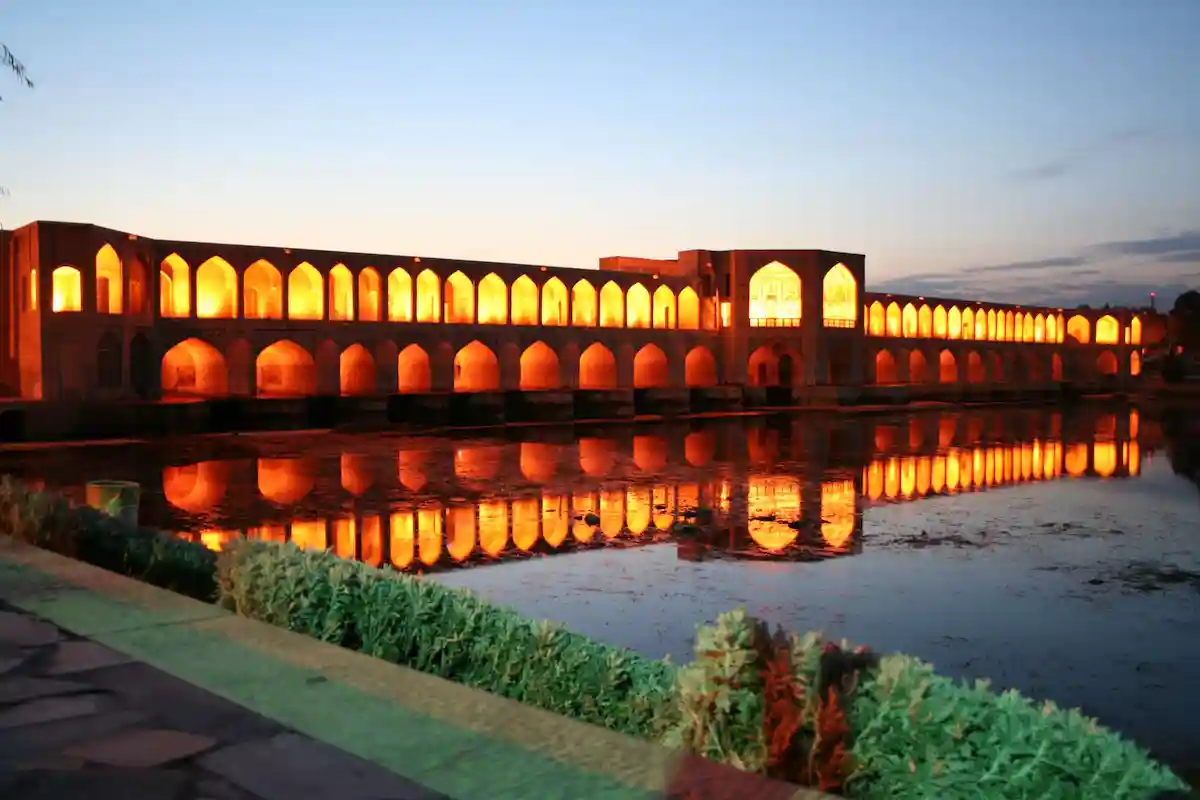
Bridges such as Khaju and Si-o-Se Pol are not merely infrastructure. They are places of encounter, walking and contemplation. The relationship between water, garden and architecture is one of the themes that also shaped Persian ornament, from garden rugs to many decorated surfaces in other media.
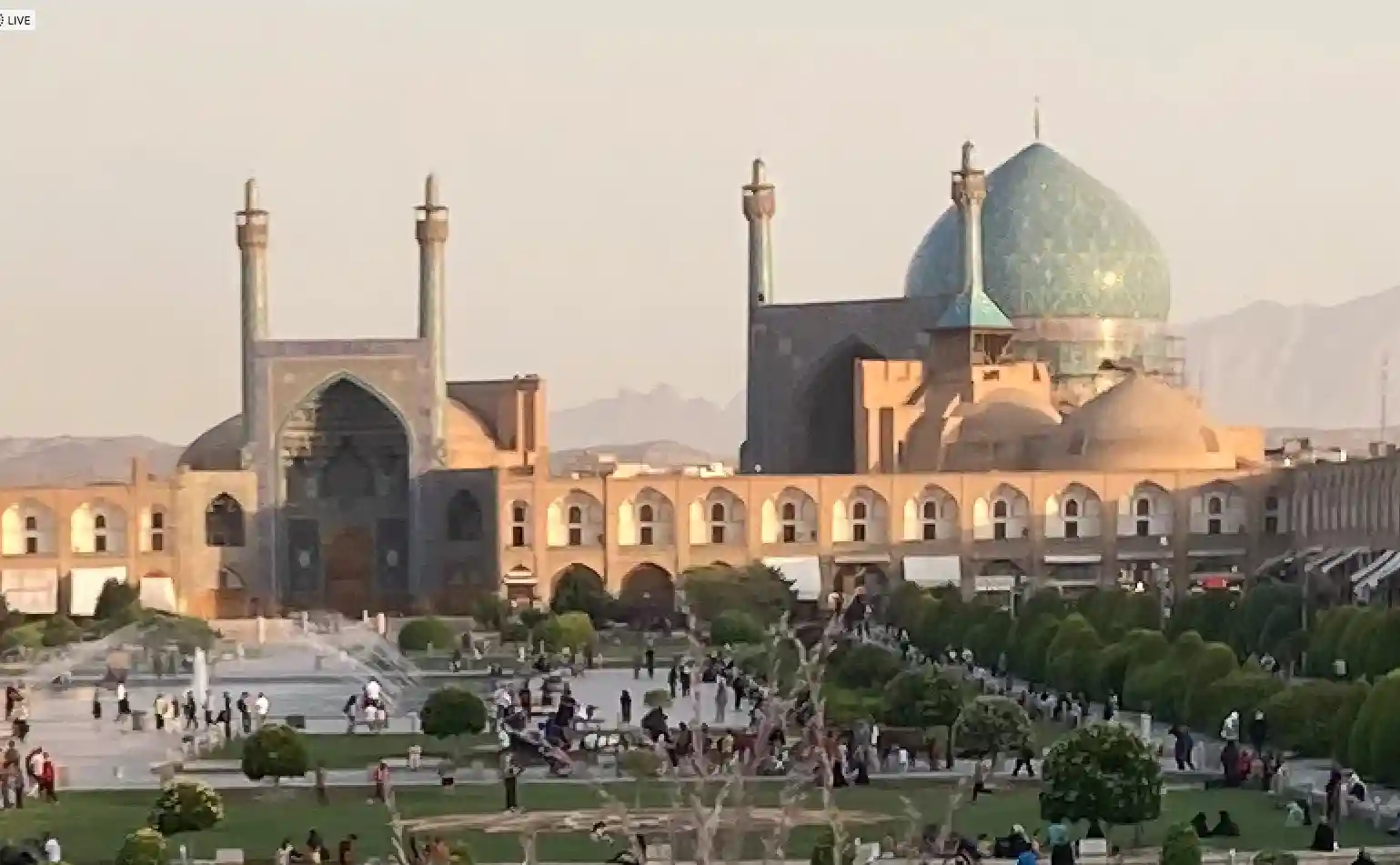
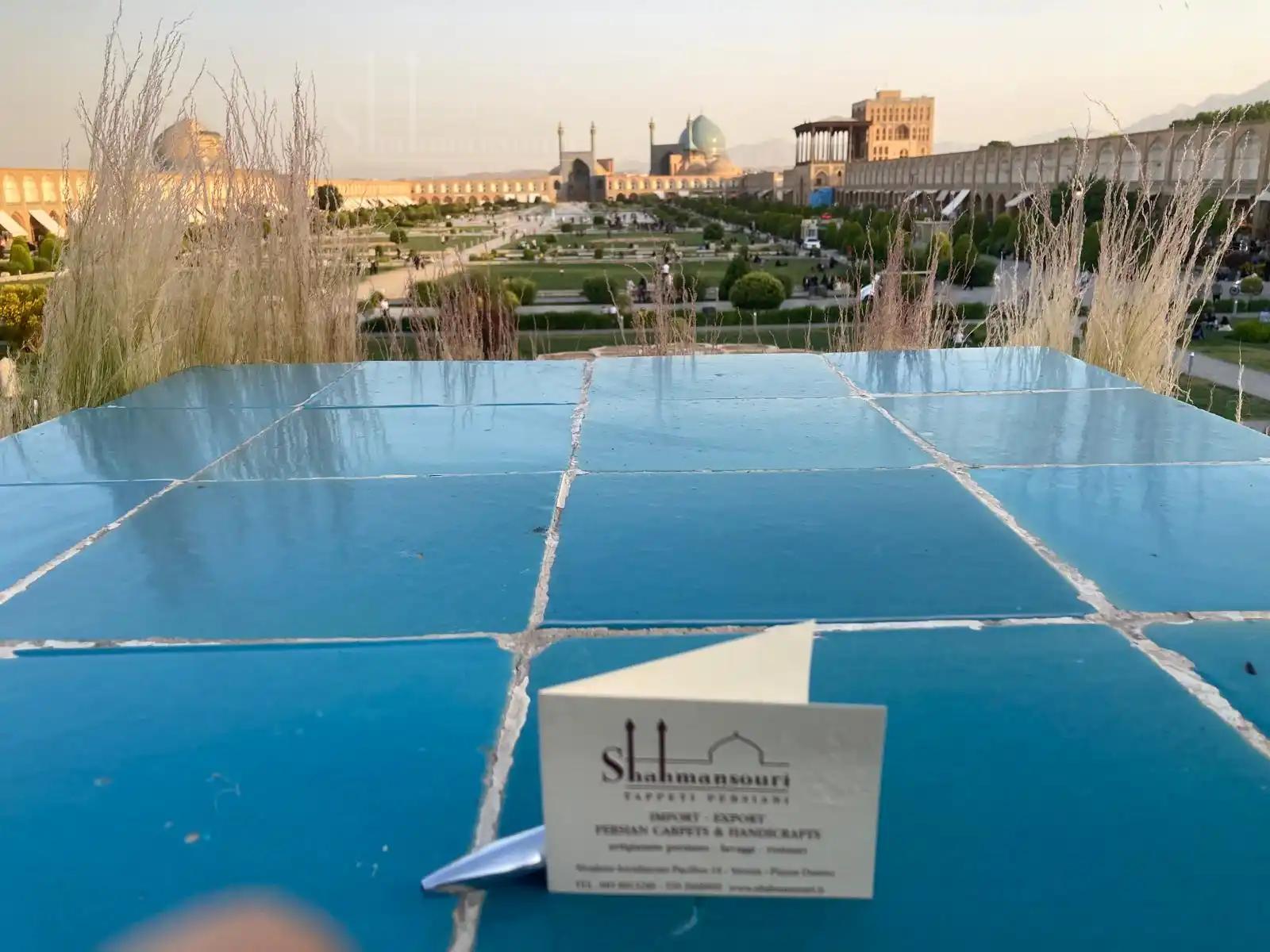
Naqsh-e Jahan Square and the Imam Mosque reveal the Persian ability to combine monumental scale, geometric clarity and chromatic richness. Turquoise tiles, portals, calligraphic rhythms and balanced composition are key references for reading many decorative arts.
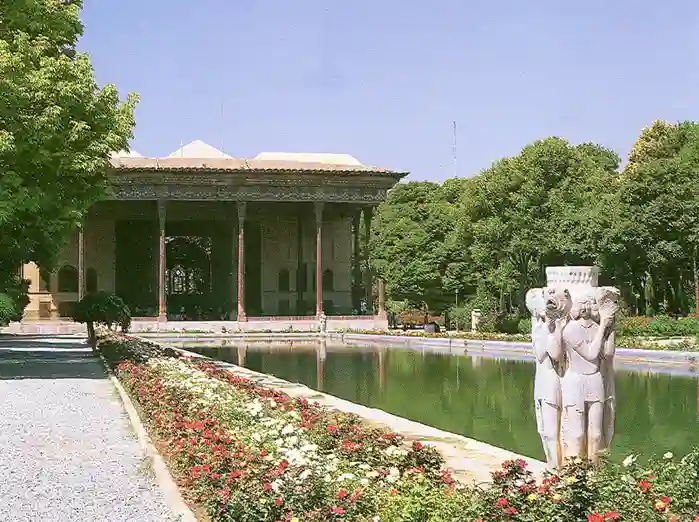
Chehel Sotoun and Vank Cathedral complete the portrait of a city where courtly culture, gardens, Armenian quarters, mural painting and decorative arts meet. Isfahan remains essential for understanding not only historic Persia, but also the aesthetic traditions that influenced some of the best known urban rugs.
Shiraz and Persepolis: poetry, memory and antiquity
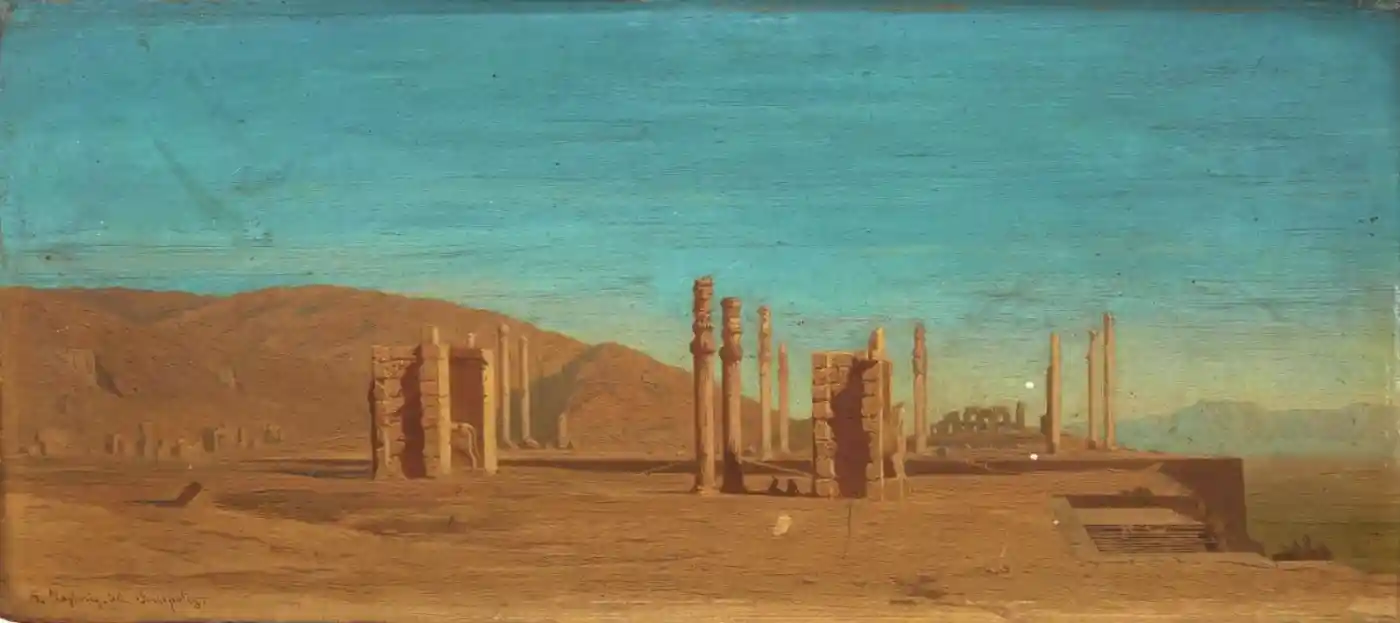
The region of Shiraz points to another face of Persia: one shaped by poetry, gardens and ancient memory. Nearby stand the ruins of Persepolis, the great Achaemenid capital associated with Darius and Xerxes. Although what remains today is fragmentary, the site retains extraordinary symbolic force and continues to represent one of the most recognisable reference points of Persian civilisation.
The staircases, reliefs, man-headed bulls and ceremonial layout of the complex give form to a culture capable of thinking on a grand scale without losing symbolic detail. That same attention to form and detail, translated into different materials and dimensions, is one of the threads connecting ancient Persia with later decorative arts.
Persia, rugs and handicrafts
For Shahmansouri, Persia is not an abstract name but the living context from which rugs, kilims and decorative objects with very different identities emerge. Historic cities, tribal areas, villages, bazaars and workshops have all produced distinct visual languages over time. This is why geographic origin matters so much: an urban rug, a tribal rug and a village rug each tell a different story.
Visitors who want to explore this relationship further can move from this page to Persian culture, Persian crafts and Persian and Oriental carpets, or consult the Persian rug guide for a clearer view of the main weaving areas.
A perspective from Verona
In our shop in the historic centre of Verona, speaking about Persia means placing each object within a broader relationship between materials, places, symbols and ways of living. This applies to a Persian rug as much as to a ceramic piece, a khatam object or an engraved metalwork item.
For information, advice or to see rugs and selected crafts in person, visit the Contacts page or browse the online catalog.