Understanding whether a Persian rug is handmade is not always immediate. Sometimes looking at the back gives the first clue. Other times, the rug seems to keep its secrets: well-arranged fringes, a balanced design, pleasant colours... but something still needs to be looked at more closely.
In our shop, we sometimes say it with a smile: a rug does not carry a passport in its pocket. It needs to be opened, turned over and observed: the pile, the fringes, the edges, the back, the materials and the way it has been constructed. Only then can we begin to understand whether it is a hand-knotted rug, a machine-made rug or a piece that deserves a more careful look.
A photograph can help, but it is not always enough. Light can change the colours, the angle can hide the back, and fringes can sometimes be misleading. Whenever possible, the rug should be seen in person: opened, gently folded, observed closely and read through what it shows.
A Persian rug cannot be recognised from one detail alone. It needs to be opened, turned over and read through its back, knots, fringes, edges, pile, materials and structure together.
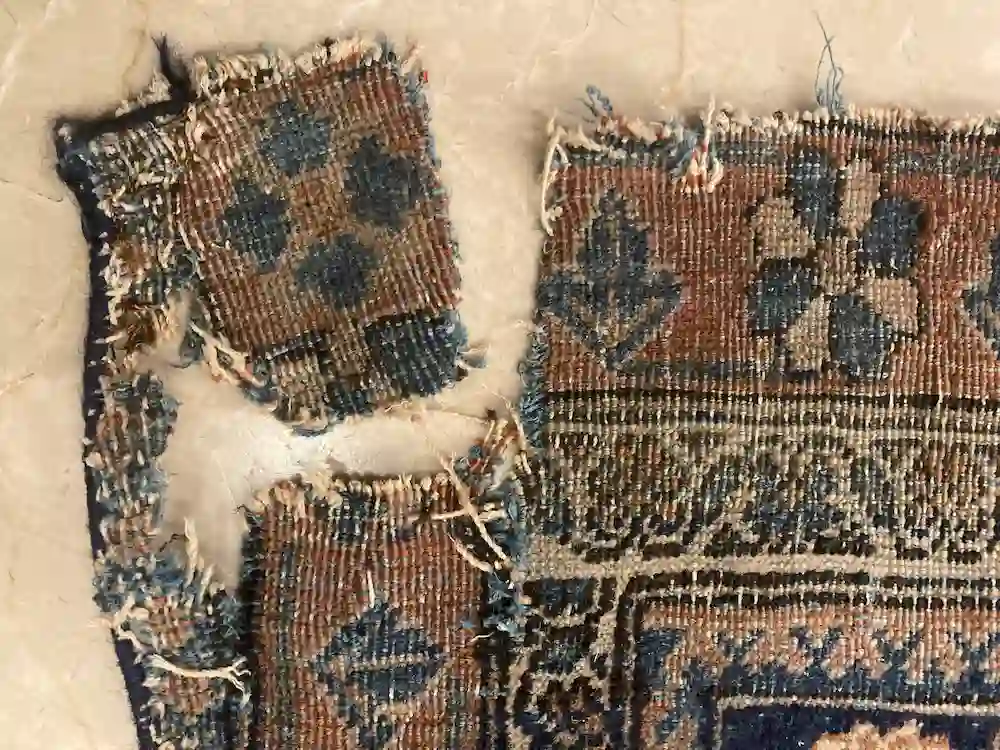
The back is one of the most important parts when trying to recognise a handmade rug. From the reverse side, it is easier to observe the structure, the knotting, the warp, the weft and the regularity of the work.
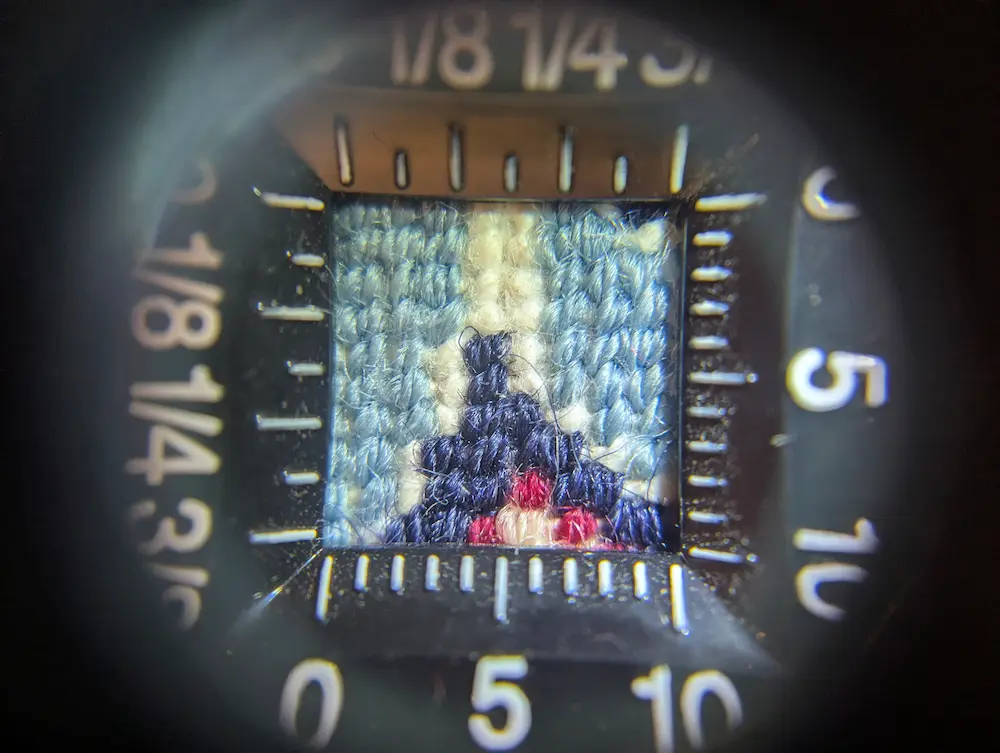
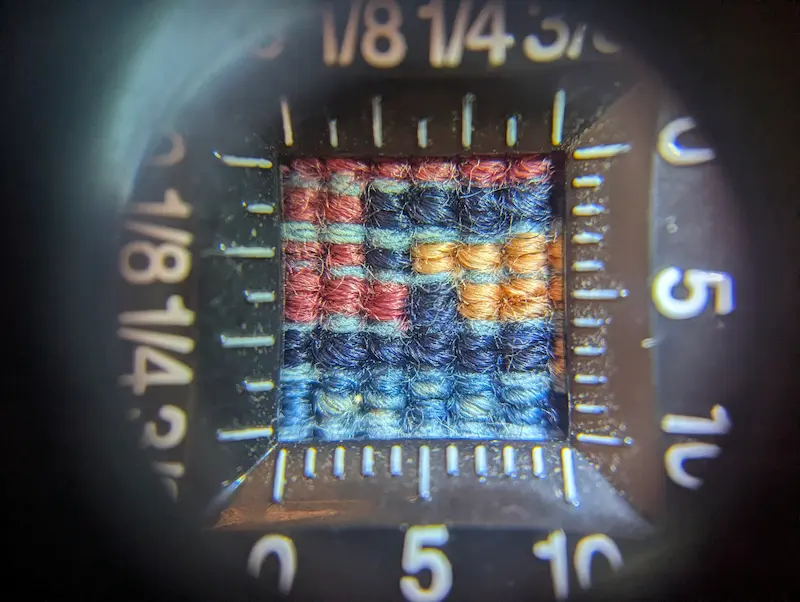
In a hand-knotted rug, the knots are not all identical. They may be finer or wider, more regular or more lively, but they do not have the absolute mechanical perfection often found in industrial rugs.
A handmade rug has life even on the back. It is not a printed design laid on a base. It is a real textile construction, built knot by knot.
Knots and small irregularities
Small irregularities are not always defects. In many handmade Persian and Oriental rugs, they are part of the character of the piece. A slightly different knot, a natural colour variation or a small change in the design can tell something about the hand that worked the rug.
Of course, not every irregularity is automatically a sign of quality. It is important to distinguish between handmade character, wear, defect and damage. Here too, the rug must be read as a whole.
Warp and weft
Warp and weft are the structure of the rug. In a handmade rug, the pile is tied to this structure. By looking at the back, it becomes easier to understand how the rug was made and whether the design truly comes from knotting.
In machine-made rugs, the back may look more uniform, more rigid or less "readable". Sometimes it is exactly this perfect uniformity that suggests the rug is not hand-knotted.
Fringes: useful clues, but not always final proof
Fringes are one of the first things people look at. And rightly so: they can say a lot. In a hand-knotted rug, fringes are usually the continuation of the warp. They are not a decorative addition, but part of the structure of the rug.
In machine-made rugs, fringes are often sewn or added later. They may look like fringes, but they do not tell the same story.
Integrated or sewn-on fringes?
To understand the fringes, you need to look at where they begin. If they seem to come naturally from the structure of the rug, this can be a good sign. If, instead, you see stitching, an applied strip or an added border, it is more likely that they are not structural.
Still, fringes alone are not enough. Some rugs are finished in a way that imitates a handmade appearance. For this reason, it is better not to judge a rug from one detail only.
When the fringes have been restored
A handmade rug may have restored or replaced fringes. This does not mean that the rug is machine-made. It simply means that this part has been repaired over time.
When looking at a rug, it is important to distinguish between original structure, restoration, wear and decorative finishing.
Why the edges are not just finishing details
The side edges, also called selvages, are another important point. In a handmade rug, the edges are part of the textile work and help hold the structure together.
Selvages are not simple frames. They protect the rug and show how the textile has been closed at the sides. If they are worn, open or repaired, they can also give information about the life of the rug.
Where the rug speaks more honestly
A handmade edge may show small differences, tension, signs of age or previous interventions. An industrial edge, instead, often tends to look more uniform and applied.
A Persian rug should also be observed from there: not only from the centre of the design, but from the points where the structure speaks more honestly.
The design: mechanical perfection or handmade character?
A handmade rug can have a very precise design, but it is rarely cold. Even in finer rugs, there are often small variations, slight asymmetries, natural shades or changes in tone.
These differences should not immediately be read as errors. In the world of handmade rugs, perfection does not always mean absolute symmetry.
Abrash and colour variations
Abrash is a natural variation in colour that may appear in the field of the rug. It can come from wool dyed at different times, changes in dye batches or the nature of manual work.
In a handmade rug, these variations can give depth and character. In an industrial rug, the colour often tends to be more uniform and repetitive.
When the design is too perfect
A design that is perfectly identical in every detail, with very rigid repetitions and no variation, can suggest machine production. But here too, caution is needed: some handmade rugs, especially fine urban pieces, can be very regular.
The difference becomes clearer when design, back, knots, materials, fringes and edges are considered together.
Materials: wool, silk, cotton and synthetic fibres
Handmade Persian rugs are often made with natural materials: wool, cotton, silk or combinations of these. Wool can have body, elasticity and warmth. Silk can give light and refinement. Cotton is often used in the structure.
Machine-made rugs more often use synthetic fibres, which may feel more rigid, uniform or differently shiny. But touch and experience matter here as well: it is not enough to say "if it is soft, then it is handmade".
Touch can help
Touch can tell a great deal. A handmade rug may have a more living texture, a more natural wool and a more flexible structure. A machine-made rug may feel more rigid, more uniform or less warm.
Touch, however, does not replace observation. It works together with everything else: back, fringes, edges, design and materials.
Silk and fine rugs
Fine rugs or rugs with silk parts require even more caution. Silk may be present in the pile, in the warp, in the weft or only in some parts of the design. It should not be declared lightly by eye alone.
Before saying that a rug is silk, mixed silk or has silk parts, it is better to observe it carefully.
Handmade or machine-made: signs to compare
A handmade rug usually shows:
a readable back;
knots that are not perfectly identical;
fringes connected to the structure;
edges consistent with the textile;
natural materials;
small variations in design or colour;
greater flexibility of the piece.
A machine-made rug, instead, may show:
a very uniform back;
a perfectly repeated design;
sewn-on or applied fringes;
added edges;
synthetic fibres;
a more rigid structure;
a very regular appearance.
These signs must be read together. None of them, alone, is always enough.
Why one photograph is not always enough
A front photograph can be misleading. It can make a simple rug look more important, or it can fail to show the quality of a finer piece. Light can change the colours, the angle can hide the pile, and the back is often not visible.
For a first remote orientation, the most useful photographs are:
the whole rug;
the back;
details of the knots;
fringes;
edges;
details of the pile;
any signatures or cartouches;
worn or restored areas.
Photographs help to begin, but they should not be confused with an official appraisal or with absolute certainty.
Seeing the rug in person in the shop
In person, much more can be understood. The rug can be opened, turned over, gently folded, observed from the back, and its pile, light and materials can be read more clearly.
In our shop, in the historic centre of Verona near the Duomo, we can look at the rug calmly. Not to give a rushed answer, but to read the piece in the right way.
Before being defined, a rug should be listened to with the eyes and with the hands. Above all, it should be observed without forcing it into a category too quickly.
A first opinion on the rug
If you have a rug and would like to understand whether it is handmade, Persian, Oriental, machine-made, old or of older workmanship, you can ask for a first opinion on the rug.
It is good to clarify this immediately: a first opinion should not be confused with an official appraisal, a certified valuation or a guaranteed quotation. It has no insurance or legal value and does not imply purchase or exchange of the rug.
Its purpose is to put things in order: to understand which elements should be observed, whether the rug deserves to be seen in person and whether it may be useful to look more closely at materials, condition, cleaning or restoration.
In some cases, recognising the structure is linked to the condition of the piece too: a rug that is very dirty, stiff or badly treated may reveal less than it should. In such cases, it can help to understand more about rug cleaning in Verona or, if edges, fringes and weak areas are involved, rug restoration in Verona.
If you are in Verona
If you are in Verona and would like to understand a rug in your home more clearly, you can send a few photographs or contact the shop to arrange a more careful viewing.
The first check is usually the back: knots, warp, weft and structure. Then fringes, edges, materials and design should be observed. One detail alone is not always enough.
Do fringes always mean that a rug is handmade?
No. In handmade rugs, fringes are often part of the warp, but some rugs may have applied or restored fringes. Fringes are a useful clue, not definitive proof.
Does a handmade rug have to be irregular?
Not necessarily. It can be very fine and regular, especially if it is an urban rug. However, small variations in knots, colours or design may indicate manual workmanship.
Is the back really so important?
Yes. The back helps read the knotting, warp, weft, density of the work, possible old restorations and the quality of the structure. It often tells more than a front photograph.
Can I understand everything from a photo?
Not always. A photo can be useful for a first orientation, but light, perspective and lack of details can mislead. It is better to send photos of the back, fringes and edges as well.
Can I bring the rug to the shop in Verona?
Yes. In our shop in the historic centre of Verona, the rug can be observed in person for a first opinion, without confusing it with an official appraisal or a guaranteed valuation.