Rug Cleaning, Restoration and Care in Verona

A handmade rug should not be treated like an ordinary surface. Before speaking about cleaning, restoration or maintenance, it needs to be opened, looked at from the front and back, and observed in its pile, fringes, edges, materials and overall structure.

In our shop, in the historic centre of Verona near the Duomo, rug care always begins from this point. First, we understand the piece; then it becomes possible to decide which path makes sense.

Sometimes a rug needs to be cleaned. At other times it is the fringes, the edges or a worn part that asks for attention. In still other cases, the first step is simply understanding what kind of rug one is looking at.

The Shahmansouri family has been linked to the world of rugs for generations. The relationship with the client does not stop at the choice of the rug itself: it often continues over time through advice, maintenance, cleaning, restoration and ongoing care of the piece.

Rug cleaning, restoration and care of Persian and Oriental rugs in Verona

First, we understand the piece; then it becomes possible to decide which path makes sense.

Find your way through the page

Page sections

First, the rug is observed

Every rug arrives with a different story. One has been lived with every day in the home, another has remained rolled up for years, another has been inherited, another is antique or an older weaving, another is finer or has silk details, another is more robust and marked by time.

A Persian rug being examined in the Shahmansouri showroom

Before deciding how to intervene, the rug needs to be looked at calmly. The front shows the design, the colours and the wear in the pile. The back helps read the structure, the knotting, the weft, the warp, any earlier restoration and the areas that have suffered more than the surface may suggest.

Fringes and edges deserve attention as well. They are not simple details: they protect the rug and often show the passing of time first.

That is why it is better not to decide too quickly. The rug is observed first, and only then does it become possible to understand whether cleaning, restoration, maintenance or simply an initial opinion may be useful.

Front

It shows the design, the colours and wear in the pile.

Back

It helps read the structure, the knotting, the weft, the warp and any earlier restoration.

Pile

It helps show whether the rug is dull, dirty or more fragile than expected.

Fringes and edges

They protect the rug and often give the earliest sign of time passing through it.

Rug cleaning: when the piece needs to be cleaned

Cleaning a Persian or Oriental rug should never be automatic. First it is necessary to understand whether the colours are stable, whether the pile is still compact, whether there are stains, deep dust, humidity or delicate areas.

Dust removal is an important stage. Dust does not remain only on the surface: over time it settles down to the base of the knots, weighs the rug down and can make it look duller.

When the rug allows it, washing with water can help clean the piece while respecting fibres, colours and structure. But every rug needs to be seen first, because wool, cotton, silk, dyes and earlier restoration do not all react in the same way.

Even touch can reveal a great deal. A rug may seem simply dirty, yet the wool may reveal dryness, stiffness, deep dust or a fibre that needs greater caution.

Rug cleaning

To explore this service in more detail, you can consult the page dedicated to Rug Cleaning in Verona.

Rug restoration: fringes, edges and worn areas

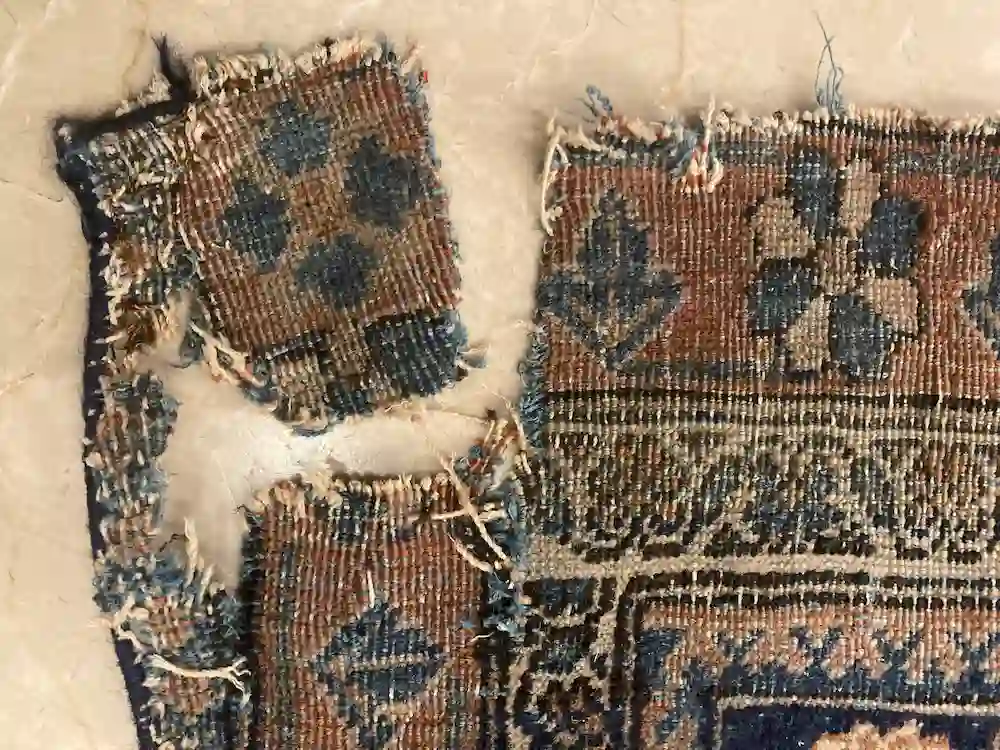
Restoration concerns the worn or damaged parts of the rug. Fringes, edges, holes, tears, weakened areas or unsuitable past work may all call for a more careful inspection.

Fringes are among the first parts to show the passing of time. Sometimes they seem simply dirty; at other times they are weakened and need a more attentive look.

Edges deserve caution as well: they hold the rug together, protect the knotted area and can reveal whether the piece has been heavily walked on, folded or stored badly.

Restoration should not be confused with cleaning. Cleaning washes and cares for the pile; restoration intervenes where the rug has lost strength, continuity or structure. In some cases the two may be connected, but they are not the same thing.

Initial guidance on the rug

Sometimes the first step is not deciding immediately whether to clean or restore. First it is necessary to understand what kind of rug is in front of you.

This can happen with a rug that has come through the family, with a piece that has remained in the house for many years, with an antique rug or an older weaving, or with a handmade piece whose origin, materials or real condition are not known.

For initial guidance, a few photographs can already be useful: the whole rug, the back, the pile, the fringes, the edges and any damaged areas.

Initial guidance should not be confused with an official appraisal, a certified valuation or a guaranteed quote. It has no insurance or legal value and it does not imply purchase or exchange of the rug.

Its purpose is to bring order: to understand whether the rug should be seen in person, whether it needs care, whether cleaning, restoration or simply an inspection may be useful.

Initial opinion on the piece

For this question, the most suitable page is the one dedicated to Rug Valuation in Verona and initial guidance on the piece.

Maintenance, moths and conservation

Proper maintenance helps a rug live better over time. Dust, humidity, moths, badly treated stains and long periods of disuse can all create problems, even when the rug still appears to be in good condition.

Moths may begin from tiny points and damage the pile or the structure. Humidity can stiffen certain areas, leave persistent smells or weaken already delicate materials. Even a stain treated at home with unsuitable products can leave marks or alter colours.

A rug that has remained rolled up for a long time is not always safe. If it has been kept in a damp or poorly aired place, it may develop odours, stiffness or small fragilities that are not immediately obvious.

That is why it is wise not to wait too long when fringes begin to open, edges wear down, areas become stiff, unusual odours appear, brightness is lost or small signs of moths begin to show. A direct conversation can help understand the most prudent next step.

Which service may your rug need?

If the rug is dusty, dull or heavy with deep dust

It may be useful to look more closely at Rug Cleaning in Verona, especially if the rug shows deep dust, loss of brightness, odours, stains or a pile that feels weighed down.

If fringes, edges or structural parts are worn

A more suitable step may be an inspection linked to Rug Restoration in Verona, especially when fringes, edges, holes, tears or weakened parts begin to compromise the piece.

If you do not know where to begin

In that case, initial guidance on the rug may help. A few photographs can be enough to begin, but seeing the rug in person remains important when it is antique, fine, delicate or raises doubts about its structure.

If you want to speak directly with the shop

You can contact the shop or come to our showroom in the historic centre of Verona. Looking at the rug together makes it easier to understand, calmly, which path may make sense.

Send a photograph of the rug or contact the shop for initial guidance.

For cleaning, restoration or maintenance, the first step remains the same: looking at the rug with attention.

Would you like to understand which service your rug may need?

You can send a photograph or contact the shop. Looking at the rug calmly helps clarify whether cleaning, restoration, maintenance or initial guidance may be useful.

Frequently asked questions

Are cleaning and restoration the same thing?

No. Cleaning concerns dust, pile, materials and the freshness of the rug. Restoration, by contrast, concerns fringes, edges, holes, tears or worn and weakened parts.

When does a rug need cleaning?

It may be useful to consider cleaning when the rug appears dull, heavy with dust, affected by odours, marked by stains or worn by everyday use. But every rug should be observed first, especially when it is antique, fine or has silk details.

When do fringes or edges need attention?

When fringes and edges are heavily worn, open, weakened or beginning to lose compactness. In such cases it is better to ask for an inspection before the damage moves further into the knotted area.

Can I send photographs of the rug?

Yes. For initial guidance, it is useful to send photographs of the whole rug, the back, the pile, the fringes, the edges and any damaged, stained or worn areas.

Do you offer pickup and delivery?

Depending on the rug and the area, you can contact the shop for information. Each case should be considered with care, without assuming the same service for every piece.