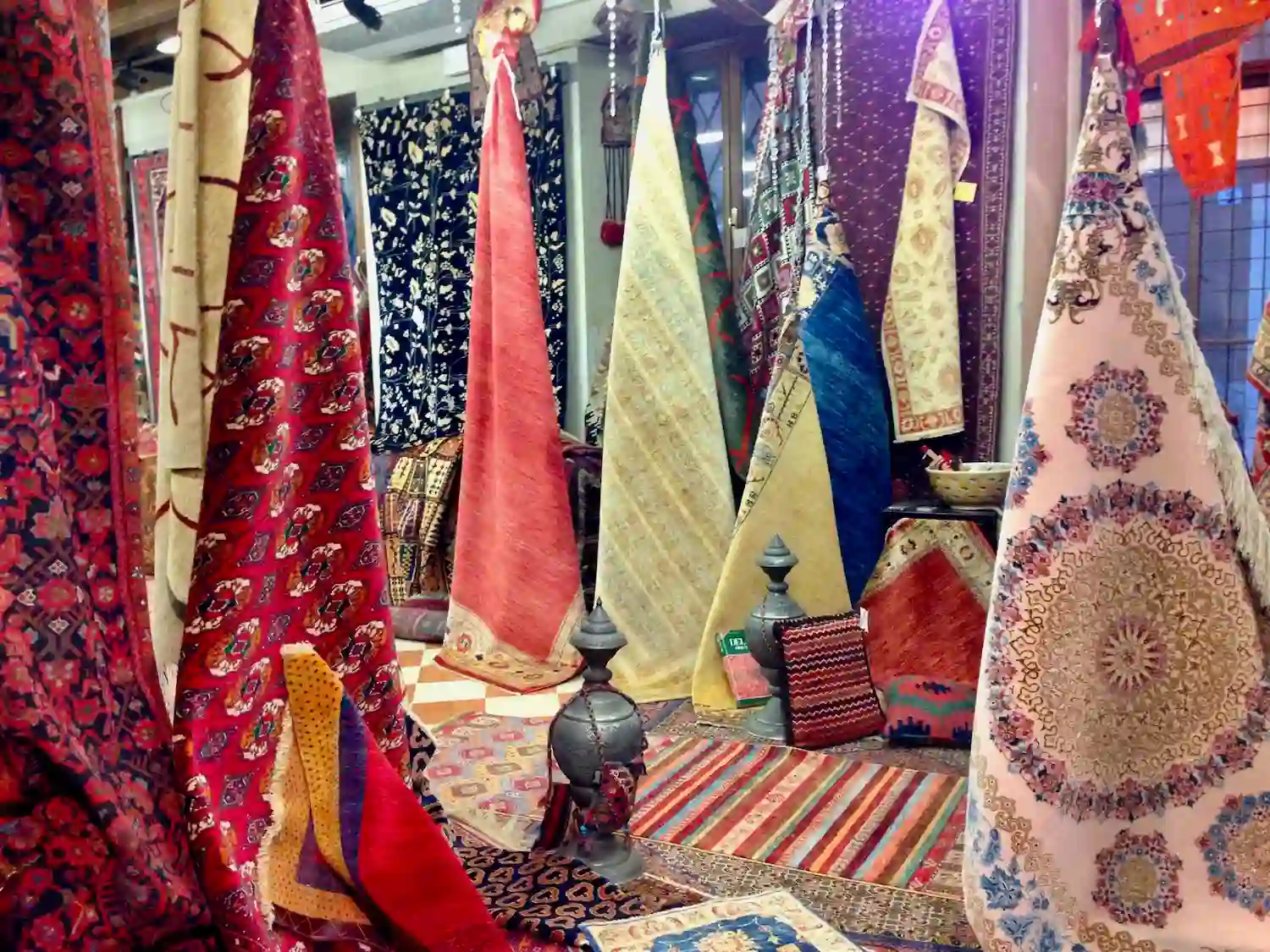
At Shahmansouri, in the historic centre of Verona near the Duomo, an antique rug is never looked at in haste. It is first opened, laid out, and observed from both front and back. The design matters, but so do the marks time has left in the pile, the fringes, the edges and the structure itself.
An antique rug carries many things with it: the hand of the weaver, the materials that were chosen, the life it has lived, the house it belonged to, any earlier restoration and those small signs that are not always faults. Sometimes they simply tell the story of the piece.
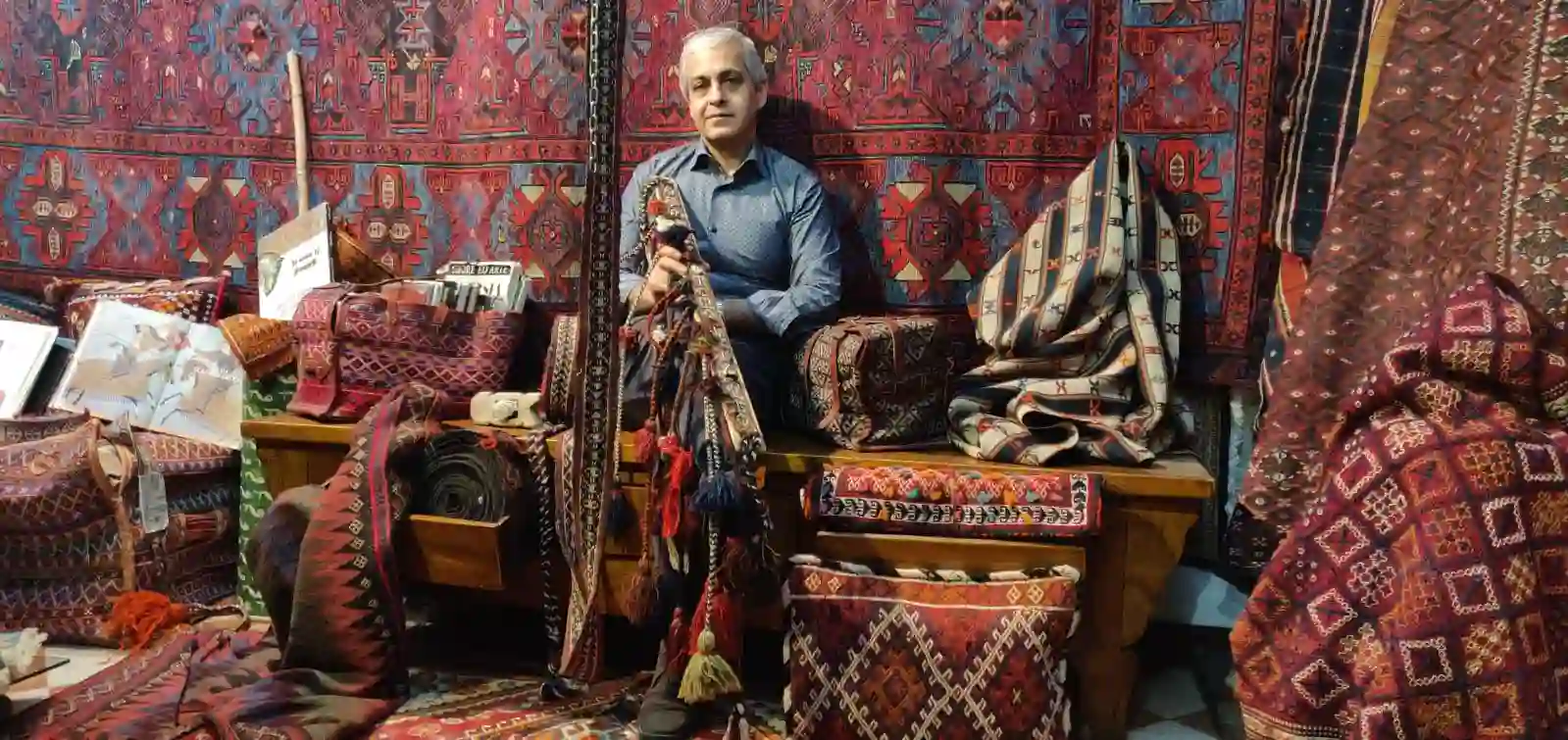
The Shahmansouri family has been connected with the rug trade for generations. Mehdi Shahmansouri, from the province of Isfahan, has lived and worked in Verona since 1991. In the shop he follows handmade Persian and Oriental rugs, classical pieces, older weavings, finer rugs, silk details, kilims and tribal pieces, together with their care over time.
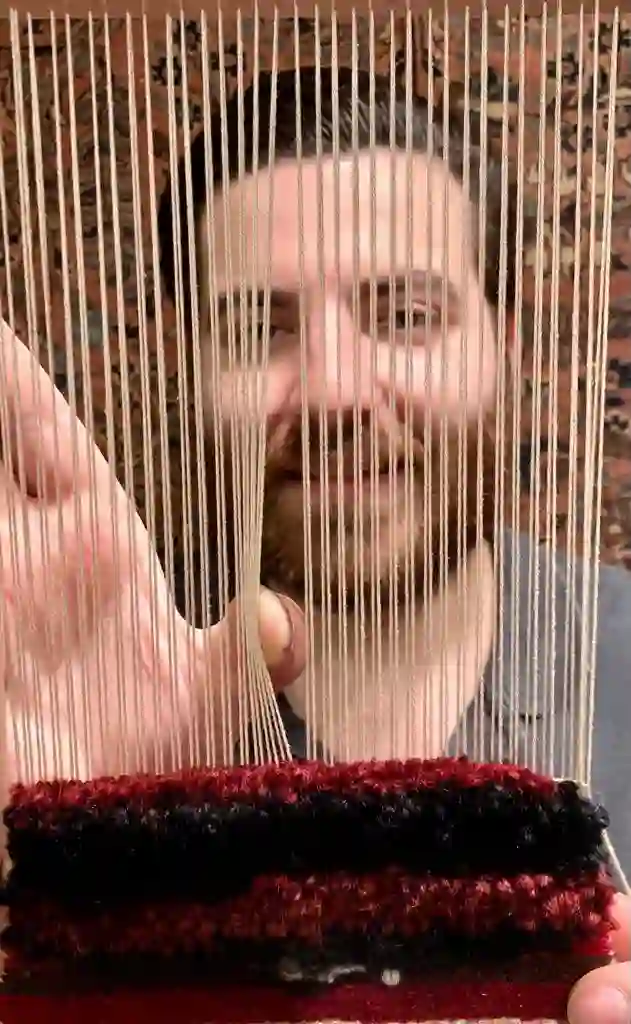
An antique rug is not understood by age alone. Age matters, but it is not enough by itself. You have to look at the quality of the wool, the fineness of the knotting, the balance of the colours, the strength of the design and the way the rug has reached the present day.
The pile may be lower in some areas. The edges may have lost compactness. The fringes may be worn. The back may show earlier restoration, stiffness or areas that have suffered more than the surface suggests. These signs need to be read carefully, not judged too quickly.
That is why we prefer to speak with caution. A photograph can help, but it is not always enough. In person it becomes easier to understand whether the wool still has life, whether the structure holds, whether the colours have kept their harmony and whether earlier work respects the character of the rug.
Age
Age matters, but it does not by itself explain the rug in a complete way.
Materials
Wool, any silk details and overall quality need to be observed calmly.
Knotting
The fineness of the knotting and the strength of the structure help to read the piece.
Condition
Pile, edges, fringes, back and older repairs say more than a single label ever could.
Antique, old or older weaving: differences worth understanding
The word “antique” is used often, sometimes too easily. In the world of rugs it is better to remain careful: not every old rug is antique in the same sense, and not every older weaving should be presented with the same words.
There are rugs with many years behind them, older weavings, lived-in pieces, rugs with strong character and pieces valued above all for materials, design, origin and state of preservation. Age matters, but so does the way the rug has been kept, used, washed, restored or stored.
Antique
A word to use with caution, after reading materials, structure, condition and the life of the rug together.
Old
It may simply describe a rug with years behind it, without saying everything about its character.
Older weaving
A more measured way to describe interesting pieces without forcing absolute definitions.
In the shop we prefer to make distinctions calmly. A rug can be important even without being defined in an absolute way. Sometimes it is the size, the colour matured by time, still-beautiful wool or a well-preserved design that makes the piece meaningful in a home.
What to observe in an antique rug
In an antique rug or an older weaving, the first glance often goes to the pile. A worn pile does not always mean the rug is compromised. You have to understand whether the wear is natural, whether the design remains legible, whether the surface still has compactness and whether the wear is distributed in a coherent way.
Colour also deserves attention. Some variations are simply part of the rug’s life and can give the piece depth. Others may result from unsuitable washing, exposure to light, humidity or interventions that have been too obvious.
Fringes and edges are not mere finishing details. They protect the structure of the rug and often show the passage of time first. If a fringe shortens, an edge opens or a side loses compactness, it is important to understand whether the problem is limited or whether it is beginning to reach the knotted field.
The back often tells as much as the front. Looking at it makes it easier to read the weft, the warp, the regularity of the knots, the tension of the structure, any earlier restoration and the points where the rug has suffered most.
Even touch reveals a great deal. A rug may look simply worn or dusty, yet the wool can reveal dryness, stiffness, deep dust or a fibre that needs greater caution.
Pile
It needs to be read to understand whether the wear is natural and whether the design remains legible.
Colours
They may show depth matured over time or signs of unsuitable washing or excessive light.
Fringes and edges
They protect the structure and are often the first places where time becomes visible.
Back
It helps you read weft, warp, structural tension and earlier restoration.
Touch
The wool can reveal dryness, stiffness or a fibre that calls for greater caution.
Antique rugs in Verona between home, taste and the shop
Those looking for antique rugs in Verona are often not simply looking for something to place on the floor. They are looking for a piece with presence, memory and measure. An antique rug should enter the home without forcing the space, without looking as though it was placed there merely to fill a room.
In some contemporary interiors, an antique rug can bring depth precisely because it is not perfect like something new. Its light is different, its colours more lived-in, its design shaped by time. In a more classical home, it can accompany furniture, textiles and proportion with great ease.
The choice has to be made calmly, looking at the rug itself. Photography helps with orientation, but in front of the piece you understand the real colour, the height of the pile, the softness of the wool, the strength of the design and the way that particular rug might live beside furniture, textiles, walls and natural light.
An antique rug should not be treated like just any rug. Before thinking about washing or restoration, it is important to understand what the piece can safely support and what instead calls for caution.
Not every sign of time should be erased. Some forms of wear belong to the history of the rug. Others can become a real problem: fringes opening, weakened edges, thinned areas, moth damage, overly rigid earlier repairs or parts beginning to lose stability.
Washing too must be considered with measure. Wool, cotton, silk and dyes do not all react in the same way, especially in older or finer rugs. Before washing a rug of some age, it is important to observe colours, pile, fringes, edges, the back and the general condition of the structure.
Care
Looking, checking, following the rug over time and understanding what it can truly bear.
Washing
Something to assess with measure in older or finer rugs, observing colour, pile, fringes and the back.
Restoration
Something to read with caution when fringes open, edges weaken or old repairs have become too rigid.
Caring for the rug is part of the relationship that continues over time. An antique rug can live in a home for many years, but every so often it needs to be looked at, cleaned, checked and followed with attention.
When it makes sense to ask for an initial opinion
It can be helpful to ask for an initial opinion when the rug shows a very low pile, altered colours, worn edges, fringes that are beginning to open, small weak points, signs of moths or earlier repairs that do not seem convincing.
For a first exchange, some photographs can be useful: the full rug, the back, the fringes, the edges and details of the most worn areas. Images help in understanding the general situation, even if they do not always replace seeing the piece in person.
Useful photographs to send
full rug
back
fringes
edges
worn areas
any earlier repairs
If you want to put order around materials, condition and possible next steps, you can also ask for an initial opinion directly through the contacts page.
Anyone in Verona can contact the shop or visit the showroom. Looking at the rug together makes it easier to understand, with more caution, whether it is an antique piece, an older weaving, or rather a rug that mainly asks for careful attention and control.
Send a photograph of the rug or contact the shop for a first orientation.
Come and see the rugs in person in the historic centre of Verona, near the Duomo.
Seeing the piece in person
Would you like to see an antique rug in person?
The online catalogue can be a first orientation, but for an antique rug, seeing it in person still matters. You can contact the shop or come to the showroom in the historic centre of Verona.
One feature on its own is never enough. Materials, knotting, back, pile, colours, condition, fringes, edges and any earlier restoration all need to be observed together. That is why it is better to avoid quick judgments.
Why is the back of the rug so important?
The back helps you read structure, knot, weft, warp, tension and earlier intervention. In many cases it says more than a frontal photograph.
Do worn fringes and edges mean the rug is compromised?
Not always. Worn fringes and edges are signs that need careful attention. Sometimes the damage is limited; at other times it may begin to involve the structure of the rug.
Does it make sense to ask for an initial opinion before washing or restoring an antique rug?
Yes. With antique or particularly delicate rugs, it is prudent to understand materials, colours, pile, back and the real condition of the piece before taking any step.